When Broadcast Natives Move into MDUs
Over the last decade, broadcast natives have quietly become a larger share of the MDU market. Demographic work from Harvard’s Joint Center for Housing Studies shows that the number of people in mid‑ and late‑career and beyond has risen sharply, and that multifamily living becomes more common as people look for less maintenance and better amenities (1). More empty nesters are selling and leaving their houses and moving into apartments and managed communities. Many of those buildings are exactly the MDU segment where fiber providers are now pulling fiber into the basement.
This segment is not offline or anti‑streaming. Surveys on media use show that across all ages, most adults now use streaming services; about eight in ten Americans watch something via streaming, and that includes a clear majority of people who started their viewing lives long before the web existed (2). Separate studies on TV consumption find that broadcast natives are also the most likely to rely on television for news, while younger adults lean much more heavily on streaming and digital sources (3).
The people who saw TV arrive in their childhood homes and built their media habits around channels have added streaming on top. They haven’t removed broadcast from their idea of how TV works. When they move into MDUs, they bring that model with them. In many MDU apartments today, you can already see the hybrid approach: the main living‑room screen supports apps and is logged into a handful of streaming services, while the bedroom or kitchen sets are expected to “just show TV” when turned on.
If the building’s connectivity design only acknowledges the app side of that equation, it pushes the work of making TV simple first onto residents and property managers, and then onto broadband providers. Each apartment may solve the problem on its own with improvised wiring and devices. Support calls that start as “the TV doesn’t work” end up somewhere between the maintenance office and the fiber helpdesk, even when the fiber itself is fine.
The alternative is not to recreate traditional pay TV. And it is not about launching a new TV product just for MDUs. In practice, a broadcast‑friendly MDU on fiber might look like this: the building is served by fiber for broadband, with Wi‑Fi and Ethernet for apps; the coax already in the walls is reused, not abandoned; in the telecom room, a compact platform turns a small number of IP streams into digital broadcast channels and feeds them into that coax; the operator offers a basic lineup: local stations and a couple of national channels – nothing more unless there is a clear commercial reason.
Residents who are happy to live fully in apps can ignore the broadcast layer. Residents who grew up with broadcast have a familiar, low‑friction way to watch TV. Property staff have a simple answer to “does TV work here?” without getting into personal logins and HDMI inputs. Is this the right model for every MDU? Probably not.
The key point is that the MDU market is not the same everywhere. The mix of broadcast natives and mobile natives varies by building. But as that mix shifts, some MDUs will naturally become more broadcast‑friendly, even as streaming remains universal. A light broadcast layer on top of coax is not nostalgia. It is an acknowledgement that the residents moving in are hybrid viewers, and that the building itself can quietly support both sides of that hybrid viewing without forcing anyone to choose.
That is the space where a simple App + Broadcast strategy can make a fiber‑fed building feel like home to everyone who lives there – no matter which decade first taught them how to watch TV.
(1) Joint Center for Housing Studies of Harvard University. (2023). Housing America’s older adults 2023. Harvard University.
(2) Pew Research Center. (2025, July 1). 83% of U.S. adults use streaming services, far fewer subscribe to cable or satellite TV.
(3) Pew Research Center. (2025, November 20). When Americans say they get news from TV, what do they mean?
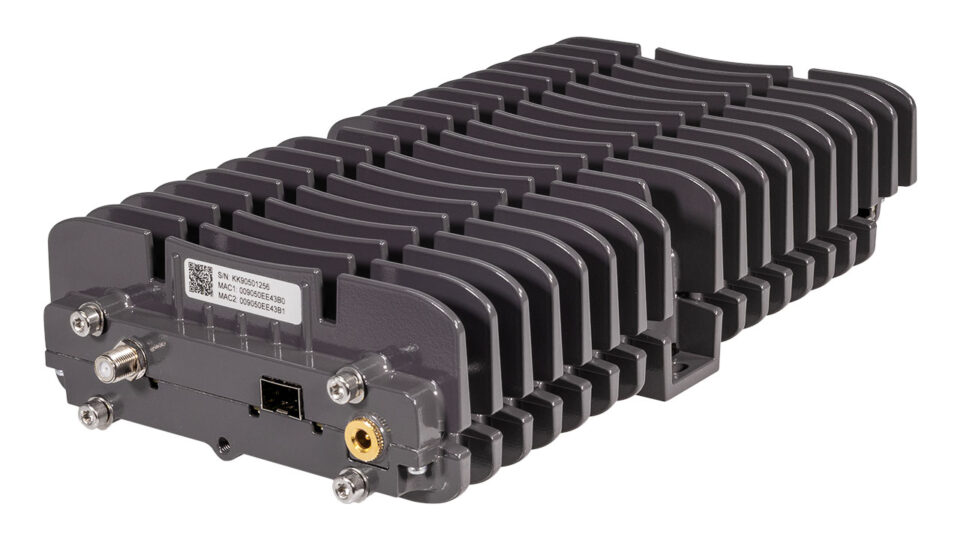
Learn more about Luminato X32
Teleste Luminato X32 is a compact, high-performance Edge QAM platform that simplifies TV signal distribution across modern networks. It integrates natively with PON architectures, supports RF overlay replacement, and enables efficient, cost-effective broadcast TV delivery.